
Odisha-based Serendipity Space successfully demonstrated drug crystallisation processes on a satellite prototype in a near-space mission. This breakthrough aims to enable pharmaceutical manufacturing in low Earth orbit, leveraging microgravity to create superior drug crystal structures for enhanced solubility, stability, and effectiveness. The mission tested core technologies, including an autonomous pharmaceutical factory, and was inspired by advancements made on the International Space Station.

One of the important topics of discussion between the two leaders is expected to be the Northern Sea Route and the Chennai-Vladivostok Maritime Corridor.
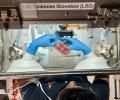
The $1.2 billion in-space manufacturing market is expected to grow and be worth more than $20 billion by 2033.

The question for the next 20 years is not whether India can become a $5 trillion or $10 trillion economy. Those are attractive targets, but the real question is whether India can create enough productive jobs, educate its children properly, make its cities liveable, and give hundreds of millions of people a substantially better life, asserts Ramesh Menon.

The remarkable rise of smallcaps reflects the emergence of a broad set of specialised businesses operating in industries where the sectoral tailwinds remain considerably stronger than macroeconomic headwinds, points out Debashis Basu.

'In investing, poor sentiment is always a good vintage to build a portfolio.'

India's mergers and acquisitions (M&A) market is projected to maintain an annual run-rate of approximately $200 billion, evenly split between domestic, inbound, and outbound transactions, despite global geopolitical turbulence, according to Rajesh Singhi, global co-head, M&A Advisory, Standard Chartered Bank.

The Beijing summit may have reduced immediate diplomatic uncertainty, but it did not resolve the deeper structural contest between the United States and China. That contest appears likely to define the coming decade, notes Varun Arya.

10 stocks from the Nifty 200 index that offer good growth potential and scope to deliver decent returns from current levels, based on brokerage estimates.

The imposition of a 100 per cent tariff by the US on imports of branded and patented pharmaceutical products starting October 1 may not significantly hurt Indian drug makers, with Sun Pharma being exposed to some headline risk but with limited earnings impact, according to analysts. Among Indian companies, only Sun Pharma has sizeable sales from patented drugs in the US (about 17 per cent of 2024-25 revenue), HSBC Global Investment Research said in a report.

Buoyant domestic sales are expected to lift revenues for pharma companies by 8-11 per cent in Q3FY26, even as declining generic Revlimid (cancer drug) sales in the US remain a key drag. Most brokerages forecast a modest 2-4 per cent growth in profit after tax (PAT) for the quarter. Hospitals and diagnostics companies, meanwhile, are likely to post much stronger numbers, with revenues seen growing 20-22 per cent year-on-year (Y-o-Y).

The fiscal tilt towards capex benefits companies in investment-related sectors like capital goods, defence equipment, engineering & construction and metal & mining. The planned cut in revenue expenditure will weigh on companies in consumption sectors like FMCG, consumer durables and retail.
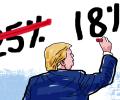
'Trump says India will buy over $500 billion of US goods.' 'At present, India's annual imports of goods and energy from the US are under $50 billion.' 'Reaching $500 billion would likely require more than 20 years, suggesting the figure refers to a long-term aspiration rather than a near-term commitment.'

Indian drugmakers supply 47 per cent of the generic medicine requirements in the US, and tariffs would have increased prices in the US domestic market for patients, who are already dealing with drug shortages.

The US Food and Drug Administration's (USFDA)'s new draft guidelines aimed at speeding up and reducing the cost of developing biosimilars - lower-priced, near-replicas of complex biologic medicines - could significantly benefit Indian biotech companies.

Two modules published by the NCERT, Swadeshi: Vocal for Local (for middle stage) and Swadeshi: For a Self-Reliant India (for secondary stage), carry excerpts from the prime minister's Independence Day address in which he stressed that self-reliance would drive India's journey towards a Viksit Bharat.
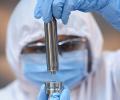
'We are looking at what kind of products, diagnostics or other solutions we can offer to become a well-rounded player in a particular disease area globally.'

Essential and strategic items such as pharmaceuticals, semiconductors, copper, and energy products like oil, gas, coal and LNG are exempted from the 27 per cent import duty announced by the US on Wednesday, according to think tank GTRI.

Artificial Intelligence, innovation and next-generation technologies figured prominently during the high-stakes discussion between Prime Minister Narendra Modi and US President Donald Trump at the White House, as the two sides announced transformative measures, including the US-India TRUST initiative, roadmap on accelerating AI infrastructure and INDUS Innovation, to boost tech ties.

'We have to be prepared for the larger disruption that is likely to take place.'

After Chennai, it is Coimbatore, Madurai, and Tiruchirappalli, that are emerging as manufacturing hubs. Coimbatore is India's top Tier-II city in terms of the number of GCCs, according to a report by Cushman & Wakefield.

'Growth for some companies has been hard to come by and this is a smart way to get there.'
There remains a debate on who said this: "When the facts change, I change my mind. What do you do, Sir?" Was it the British economist John Maynard Keynes or the American economist Paul Samuelson. Irrespective of who said it, this sentiment appears to have found resonance in ITC's boardroom in recent years.

India's economic growth forecast for 2025 has been revised downward to 6.3 per cent, and despite a projected moderation, the country remains one of the fastest-growing large economies, supported by resilient consumption and government spending, the United Nations has said.

Foreign direct investment (FDI) inflows into India have crossed the $1 trillion milestone in the April 2000-September 2024 period, firmly establishing the country's reputation as a safe and key investment destination globally. According to data from the Department for Promotion of Industry and Internal Trade (DPIIT), the cumulative amount of FDI, including equity, reinvested earnings and other capital, stood at $1,033.40 billion during the said period.

'The intensity and frequency of heatwaves will be much higher than in previous years over Punjab, Haryana, Rajasthan, Gujarat, Madhya Pradesh and Odisha.'

Research and development (R&D) spending by BSE 100 companies has grown steadily, rising from 0.89 per cent of revenue in FY20 to 1.32 per cent in FY24, averaging around 1 per cent over the period in-between, according to data compiled from Bloomberg and company annual reports. Also, these companies more than doubled their R&D spending in absolute terms over these five years: From Rs 25,041 crore to Rs 63,072 crore. While this reflects a prioritisation of innovation, corporate R&D investment remains relatively conservative.

Nirma's tryst with the pharmaceutical space started in 2006 when it acquired the ailing Core Healthcare in a deal reported to be worth Rs 300 crore. The Ahmedabad-based manufacturer of intravenous fluids was subsequently renamed Nirlife. Pharma industry insiders say Nirma, which broke open the detergent market in the 1990s with low prices and massive advertising, tried an encore of the low-price strategy in pharma, but with mixed results.

Apprentices get at an average of Rs 10,000 to Rs 12,000 per month which can double after one year of on-the-job training.

India's economy could prove to be the "most resilient" in the subregion of South and South-West Asia over the long term, according to a report by the UN, which says a positive but lower economic growth post COVID-19 pandemic and the country's large market will continue to attract investments. The report titled 'Foreign Direct Investment Trends And Outlook In Asia And The Pacific 2020/2021', and compiled by United Nations Economic and Social Commission for Asia and the Pacific (UNESCAP), stated that inward FDI flows to South and South-West Asia slightly decreased by 2 per cent in 2019, from $67 billion in 2018 to $66 billion in 2019. The growth, however, was mainly driven by India, which accounted for 77 per cent of the total inflows to the subregion and received $51 billion in 2019, up 20 per cent from the previous year.

Gujarat has around 3,000 licensees for allopathic drug manufacturing, apart from around seven homeopathic licensees, 500 ayuvedic and 600-700 cosmetics licensees

'Midcap and smallcap indices are trading in the expensive zone.'

'API prices are dragging down margins and impacting our competitive ability.'

Global private equity investor Advent International on Monday said it is acquiring a significant stake in Suven Pharmaceuticals from its promoters, the Jasti family. The PE major said this will be followed with an open offer to acquire 26 per cent more in the listed contract development and manufacturing organisation from public shareholders, and also merge the company with investee company Cohance Lifesciences, as per an official statement. Media reports on a Monday morning pegged the acquisition at Rs 6,300 crore, and that Advent had pipped rival Blackstone for the acquisition.

'There is not any negative connotation associated with it.'

Operating margins have been the primary driver of corporate earnings in India in recent quarters, despite revenue growth suffering from weak consumer demand. Companies across sectors have reported a sharp improvement in earnings before interest, tax, depreciation, and amortisation (Ebitda) margins over the past two years, benefiting from lower commodity and energy prices. Higher margins more than compensated for slower revenue growth, resulting in double-digit growth in net profit for five consecutive quarters.

As the triangular political contest in Telangana intensifies, many believe that for the regional major BRS, it is a battle for survival after being routed in the assembly polls held late last year. What is haunting the party this time is the scams, the 10-year anti-incumbency factor, and family dominance in the party.

This is the Mukesh Ambani-led company's second entry into the dairy segment and it will directly compete with Amul and Mother Dairy.

Pirojsha Godrej, 43, patriarch Adi Godrej's son, is set to take over as chairman of the Godrej Industries Group from 2026 whol Nyrika Holkar, Smita Godrej Crishna's 42-year-old daughter, has emerged as the face of the Godrej Enterprises Group.
The government is targeting 1,200 technical collaborations between Japanese companies and Indian investors for over Rs 42,000 crore, 200 joint ventures with overseas investors for Rs 14,000 crore, and another Rs 14,000-crore investment from about 50 multinational companies.
